Know the oriental hornet
Vespa orientalis — locally “id-dabbur ahmar”. It hunts honeybees at the hive entrance and can wipe out weak colonies in late summer and autumn.
About the species in Malta
- The largest wasp found in Europe and Malta (Vespa orientalis Linnaeus, 1771; family Vespidae).
- Despite its name, it is native to the Maltese Islands. It became very rare in the 1960s–70s, but numbers have risen again, mostly around towns and apiaries.
- Adults feed on nectar and sugary foods for energy, and hunt insects (including honeybees) to feed their larvae.
- Colonies are seasonal: a single queen starts a new nest in spring. In Malta the active season runs roughly from late April to mid-November.
- It is not aggressive to people unless threatened — avoid touching it or waving your hands.
Sources: Wild Plants of Malta and Gozo, Environment and Resources Authority (ERA), Albanozzo (2021), University of Malta. See all Credits & Sources.
How to recognise it
- Large (2.5–3.5 cm), reddish-brown body.
- One or two bright yellow bands near the end of the abdomen, and a yellow patch on the face.
- Often seen hovering (“hawking”) in front of hives, catching bees in flight.
- Nests are usually underground, in walls, rubble or tree cavities.
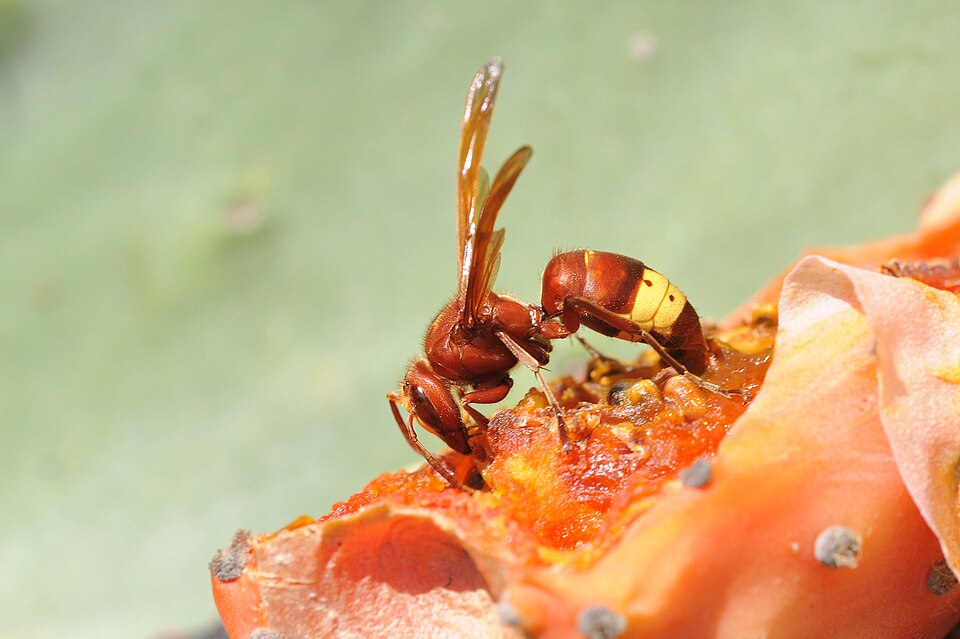
Close-up: reddish-brown body with the bright yellow band near the tail. Often seen on ripe fruit such as prickly pears.
Photo: Zeynel Cebeci, CC BY-SA 4.0 via Wikimedia Commons
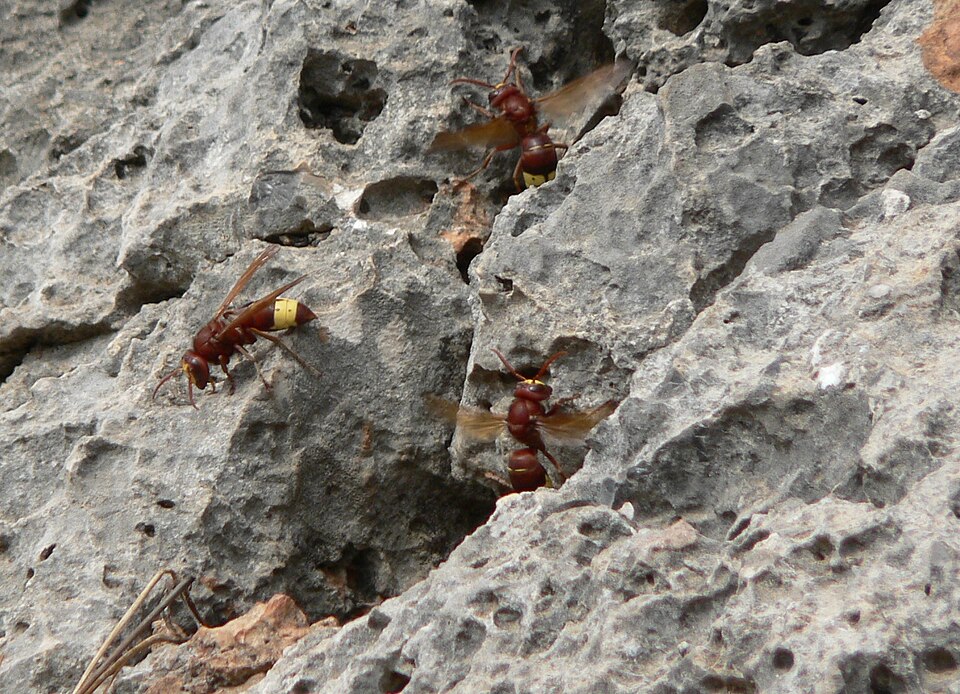
Hornets going in and out of a nest in a rock crevice — typical of rubble walls and rock faces in Malta.
Photo: Kreta, Public domain via Wikimedia Commons
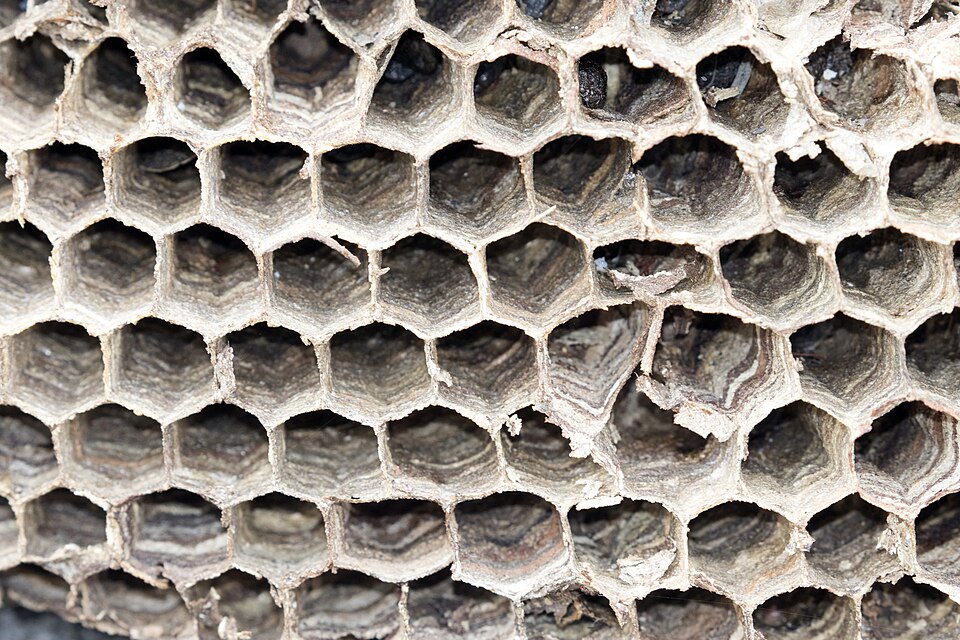
Inside a nest: grey, papery comb. If you see this, keep away and contact a pest controller.
Photo: Zeynel Cebeci, CC BY-SA 4.0 via Wikimedia Commons
Stay safe
- Never try to destroy a nest yourself — stings can be dangerous, especially with many hornets.
- Keep at least 5 metres from a nest entrance and avoid vibrations near it.
- If stung and you feel faint or have trouble breathing, call 112 immediately.
If you find a nest
- Note the location and take a photo from a safe distance.
- Report it here so it shows on the map, then contact a licensed pest controller or your local council.
- Once it’s removed, add a new “Nest found” report with status “destroyed”.
Protecting your hives
- Reduce hive entrances or fit muzzles so bees can defend themselves.
- Use selective traps away from the apiary and log weekly catch counts on the Impact page.
- Report every intervention with its start date — this is how we measure what works.
Confirming other reports
- Saw the same hornets or nest? Tap a pin on the map and press “I saw this too”.
- Confirmed reports carry more weight for beekeepers and policy makers.
Feedback, bugs & missing information
Found a problem, a wrong locality, or have an idea? Tell us either way:
- GitHub: open an issue on the project's GitHub repository (Issues tab → “New issue”). Describe what happened, the page, your device, and add a screenshot if you can.
- Email: info@stefanbuttigieg.com — no GitHub account needed.